
Match the board to the job
A small board works for lemons, bar prep, and quick snacks. A larger board gives you room for onions, herbs, roasts, bread, and serving. If you cook most nights, choose enough surface area that the food stays on the board.
For serving, weight matters. A long charcuterie board can look good on a table, but you still need to lift it, wash it, and store it.
Choose grain for how you cut
Edge grain boards show long strips of wood and handle daily prep well. They offer a good balance of strength, price, and maintenance for most home kitchens.
End grain boards use the ends of the wood fibers as the cutting surface. They can be easier on knife edges, but they take more labour and usually cost more. If you want one, ask about thickness, weight, and care before you order.
Think about wood, contrast, and finish
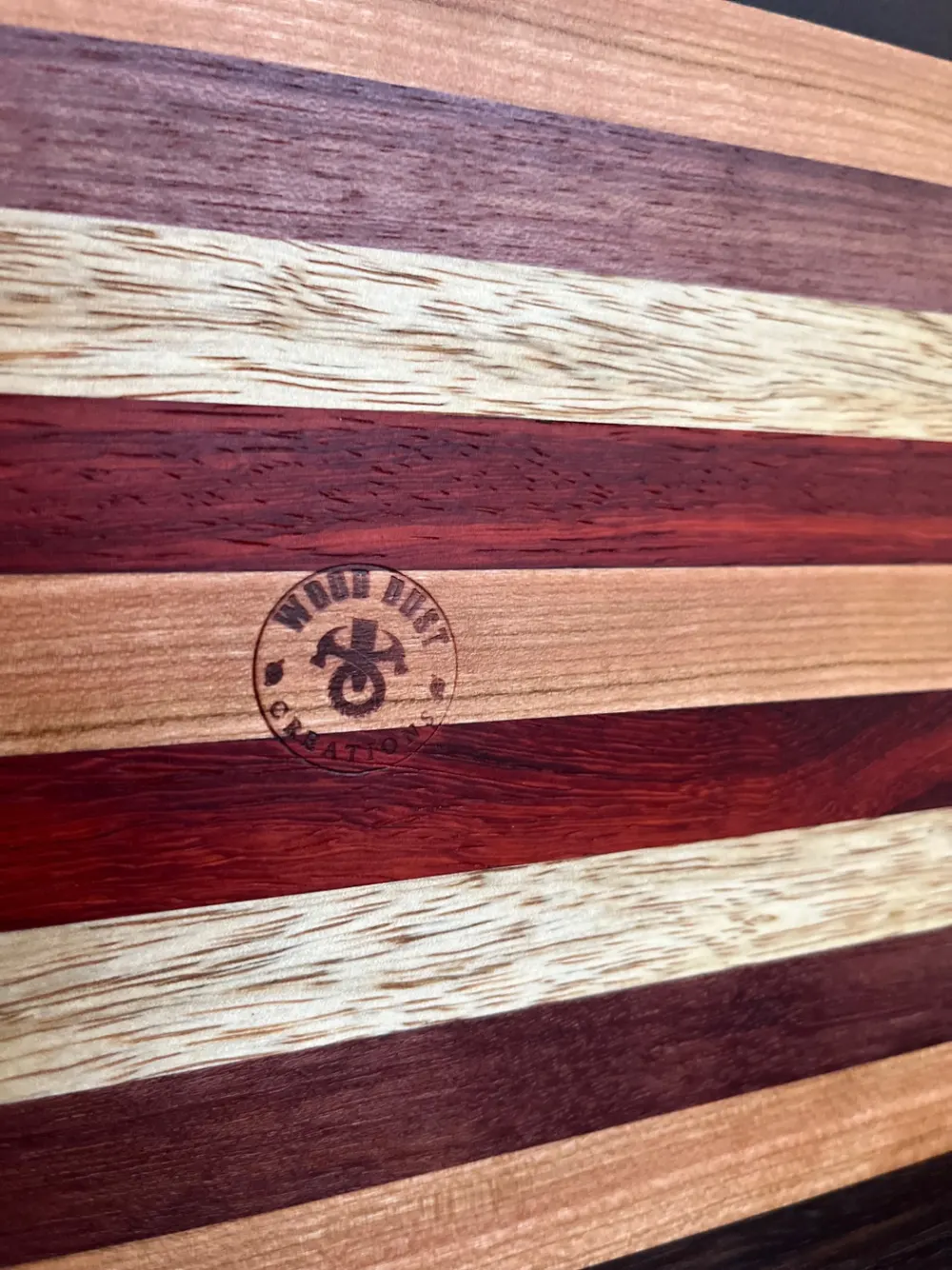
Maple gives a clean, light look. Walnut brings darker contrast. Cherry warms over time. Mixed hardwood boards can show stripe patterns without needing stain.
Kitchen boards should use a food-safe finish and a simple refresh routine. If the board needs heavy decorative staining or a glossy film finish, it may belong on the serving side instead of the chopping side.
Decide before you ask for a quote
Send the approximate length, width, thickness, and intended use. Mention whether you want a juice groove, handle, feet, rounded corners, or a serving shape.
If the board is a gift, include the date you need it and whether the recipient cooks, hosts, camps, bakes, or mainly wants a serving piece.